
“ The heart…is the beginning of life; the sun of the microcosm…for it is the heart by whose virtue and pulse the blood is moved, perfected, made apt to nourish, and is preserved from corruption and coagulation; it is the household divinity which, discharging its function, nourishes, cherishes, quickens the whole body, and is indeed the foundation of life, the source of all action.”
— William Harvey, 1628, British physician credited with the beginning of cardiology. He observed the motion of the cardiac chambers and the circulation of blood.
The Heart Sound Recording offers preventative and nutritional healing solutions to restore your heart's function to optimal balance. It captures deeper insights about your overall heart health by assessing your heart's tone, rate, and rhythm. It also points at other possible dietary deficiencies not only in your heart but often also in your whole body.

Your heart is more than just an organ that circulates blood throughout your body; many in modern science believe the heart is more powerful, healing, and transformative than we ever realized.
Our heart seems to be the most important organ of our body. How else could it beat 100.000 times a day and keep sending 2000 gallons of blood through 60.000 miles of blood vessels daily?!
That is also why the heart is the root of Shen (Spirit) in Traditional Chinese Medicine and is considered the Emperor or Empress. Our heart contains in it the Wu Xin, the five qualities of the heart: Trust - Openness - Love - Gratitude, and Respect.
With approximately 40,000 neurons, the heart sends more neural signals to the brain than the brain sends to the heart. Our heart is so sensitive and dynamic that it responds to intuitive signals, and the brain follows suit.
Our heart is also the home of our feelings and emotions. This also explains how important it is to rest, meditate and spend time in Nature to re-harmonize your precious heart.
Therefore never put your cell phone into your shirt’s pocket as it will compete with your heart’s Sinus Node - the ignition of your precious heart.

Our heart is also the first muscle that responds to nutritional deficiencies.
Why is it so important to take better care of your heart? Let’s take a look at the current statistics when it comes to heart health:

Due to the high incidences of various cardiovascular diseases in the last century, Dr. Royal Lee invented the Heart Sound Recorder, the Endocardiograph. Here is how Dr. Royal Lee described it:

- founder of the Heart Sound Recorder
Dr. Royal Lee initially designed the Heart Sound Recorder to prove to the very skeptical medical world of his days that nutrition indeed could impact the body, demonstrated by the improvements he could show in regard to heart function.


The Endocardiograph by Dr Royal Lee - 1937

The Heart Sound Recorder TODAY
Re-Engineered after 70 years
For the heart to function optimally, it must receive proper nutrition to maintain its correct rate, rhythm, and tone. The Heart Sound Recorder is a general wellness cardiac stress monitor with a specialized microphone placed over the four heart valves to graph specific heart sounds and their movements. Based on the patterns we observe from the recording (like seen in the diagram below), we can create nutritional healing solutions that stabilize your heart and contribute to your whole body's healing.
Example of a Heart Sound Recording Graph

The Heart Sound Recorder graph is taken at all four heart valve positions.

2. We analyze the Heart Sound Recorder graph in detail and determine what nutritional and herbal support is most needed to bring your heart back to optimal balance.
The heart sounds recorded at four distinct locations reflect the four different heart valves and their associated functions. Every valve pattern points the practitioner to possible nutritional deficiency patterns. In the HSR assessment, we pay special attention to your heart's rhythm, rate, and tone. We aim to "nourish your heart back" to balance and optimal function. Optimal refers to physiologically normal. That way, your heart works most efficiently and effectively.

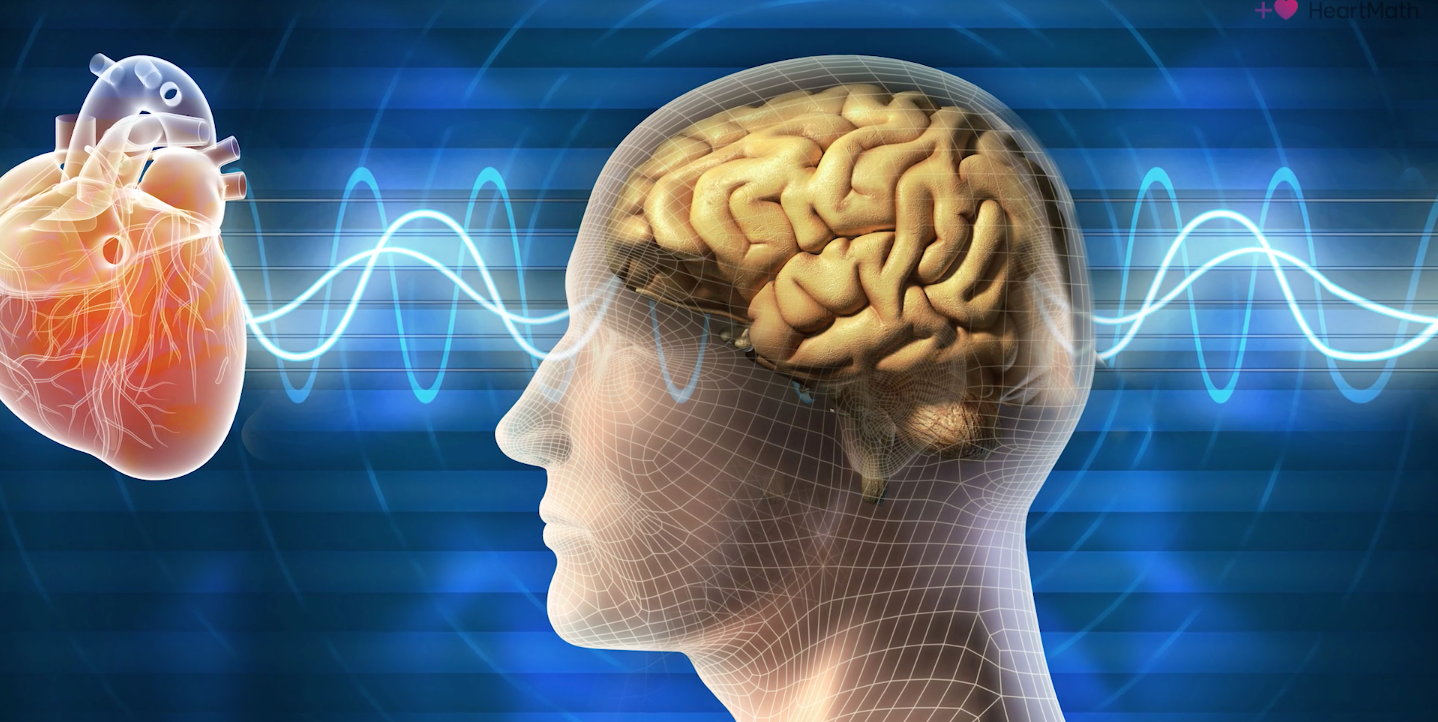
Let’s take a look at the central role of the heart in controlling the mind:
Some researchers refer to the heart as the "little brain."
There are 40,000 neurons relaying information to the brain from the heart, leading researchers to call the heart the “little brain” and to coin the field of neurocardiology.
The heart communicates to the brain and the body; it does it in four ways:
Nervous system connections
Hormones produced in the heart itself
Bio-mechanical information via blood pressure waves
Energetic information from the strong electrical and electromagnetic fields.
The fact that the heart produces hormones released into the bloodstream affecting all of the body was first demonstrated 30 years ago and has led to tests routinely performed in hospitals across the country.
More information is sent from the heart to the brain daily via these four means of communication than vice versa.
Indeed, the neurons within the heart enable the heart to learn, remember, and make decisions independent of the brain's cerebral cortex.
The heart emits more electrical activity than the brain.
The heart emits an electrical field 60 times greater in amplitude than the activity in the brain and an electromagnetic field 5,000 times stronger than the brain.
The electromagnetic field of the heart is very strong.
It can be measured anywhere on the body (using an EKG with electrodes on the ankles and wrists) and several feet outside the body.
Activity in one person's heart can be measured in the brain waves of another person.
The electromagnetic field of two individuals (human or pet and human), touching or within a few feet of each other, can interact so that energy activity in the heart of one individual is measured in the brain waves of the other. The act of touch for healing therapies can be postulated due to this communication method.
The electrical activity of the heart and the brain can be guided into a synchronous electrical rhythm easily measured and displayed by simply focusing on positive and loving emotions emanating from the heart.
Organ “coherence” is associated with improved higher-level functioning, lower blood pressure and cortisol levels, and improved immune system function.
Beyond most common beliefs:
Your body is not suffering from a drug deficiency, but instead,
most health problems today are a result of long-term nutrient deficiencies.
That’s precisely the approach we are taking: feeding you back to health.

my HSR Mentor, Joseph Antell in Berkeley, CA, 2024
A Heart Sound recorder IS basically a Cardiophonogram (also called a Phonocardiogram or PCG). It is a graphical recording of the sounds and vibrations produced by the heart. It is essentially the acoustic counterpart to an ECG:
ECG records the heart's electrical activity.
Cardiophonogram/Phonocardiogram records the heart's mechanical sounds and vibrations.
Using a sensitive microphone or piezoelectric sensor placed on the chest, the device captures:
S1 ("lub") – closure of the mitral and tricuspid valves.
S2 ("dub") – closure of the aortic and pulmonary valves.
S3 and S4 (when present).
Murmurs.
Valve clicks and snaps.
Turbulent blood flow.
The signal can be displayed as a waveform synchronized with an ECG.
Dr. Royal Lee's Heart Sound Recorder
Royal Lee developed a Heart Sound Recorder during the mid-20th century. His device was among the earliest attempts to objectively analyze heart sounds rather than rely solely on auscultation with a stethoscope.
His philosophy was that:
The mechanical function of the heart often changes before obvious electrical abnormalities appear on an ECG.
Careful analysis of heart sounds could reveal subtle nutritional deficiencies and early cardiovascular dysfunction.
Royal Lee's Unique Perspective
Where Dr. Lee differed was in how he interpreted the recordings.
He believed heart sounds reflected:
Nutritional status
Myocardial vitality
Mineral deficiencies
Early degeneration of cardiac tissues
Coronary circulation
Myocardial energy production
It is best viewed as a complementary assessment rather than a replacement for echocardiography, ECG, or vascular imaging.
