A New Vision of Your Cardiovascular Health
Leading with Prevention through
Central Intima-Media Thickness (CIMT) Testing
“The best prevention test you ever did for yourself!”
Conventional risk calculators estimate the probability of future disease, whereas vascular imaging can show whether the disease process is already present.
Across the globe, around 20 million people die from cardiovascular disease (CVD) every year, and most of these deaths are due to atherosclerosis. Atherosclerosis may begin in early adulthood and remain clinically silent for decades before manifesting mainly as a heart attack, stroke, or sudden cardiac death.
Register now for Friday, October 23rd, 2026
Why Book a CIMT Integration Session?
A CIMT Integration Session places your CIMT findings within the broader context of your overall health, existing health challenges, and cardiovascular risk. Although optional, this session is highly recommended when the CIMT reveals significant findings.CIMT results are generally available 10 days after your ultrasound testing.
CIMT results are generally available 10 days after your ultrasound testing.
What is CIMT Testing about?
CIMT is a radiation-free, non-invasive ultrasound that measures the thickness of the carotid artery walls, detecting early arterial changes - often years or decades before symptoms or standard lab markers indicate increased cardiovascular risk. This test helps detect early signs of atherosclerosis, which can increase the risk of heart disease and stroke.
The scan takes just 10-15 minutes. Once your results are ready, you’ll receive an email with your results along with instructions to schedule a Zoom consultation to review your findings and discuss next steps.
What it assesses:
Your arterial age
Structural arterial wall thickening
Vascular inflammation
Presence of plaque (soft, heterogeneous, and calcified)
Early atherosclerosis burden
What it predicts:
Early Event Risk (4-7x higher statistical risk)
Your myocardial infarction and stroke risk
Independent of "normal" cholesterol
Expert clinical summaries note that ~50% of heart attacks occur with “normal” cholesterol. A commentary in Harvard Health based on epidemiologic data indicates that about half of all heart attacks occur in people with “normal” cholesterol levels because traditional cholesterol tests do not capture plaque burden or other risk mechanisms.
CIMT Sample Report

Vascular Health is complex and must be viewed in the broader context of your overall physiology!
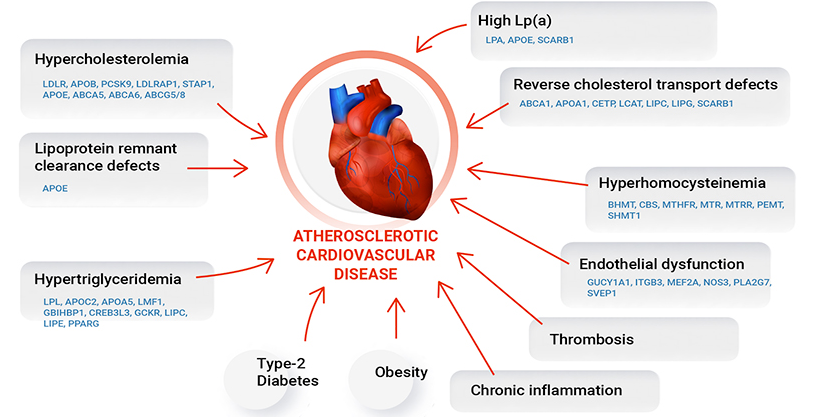
Cardiovascular disease is still the #1 killer in the U.S. for both men and women!
70% of heart attacks and strokes are caused by one disease . . . atherosclerosis, which is nearly 100% preventable.
Atherosclerosis is responsible for >38% of the deaths in women and nearly 1/3 of the deaths in men each year.
50% of men and 64% of women who die suddenly of coronary heart disease HAVE NO PRIOR SYMPTOMS.
The largest gap in US healthcare today relates to the gross underdiagnosis of those at risk for cardiovascular disease, e.g., atherosclerosis.
CIMT caught 98.6% of the heart attacks and strokes BEFORE they occurred in a 10-year, 100,000-person-year study.
Many patients in the early and intermediate stages of atherosclerosis show no outward signs or symptoms of the disease.
Plaque Progression
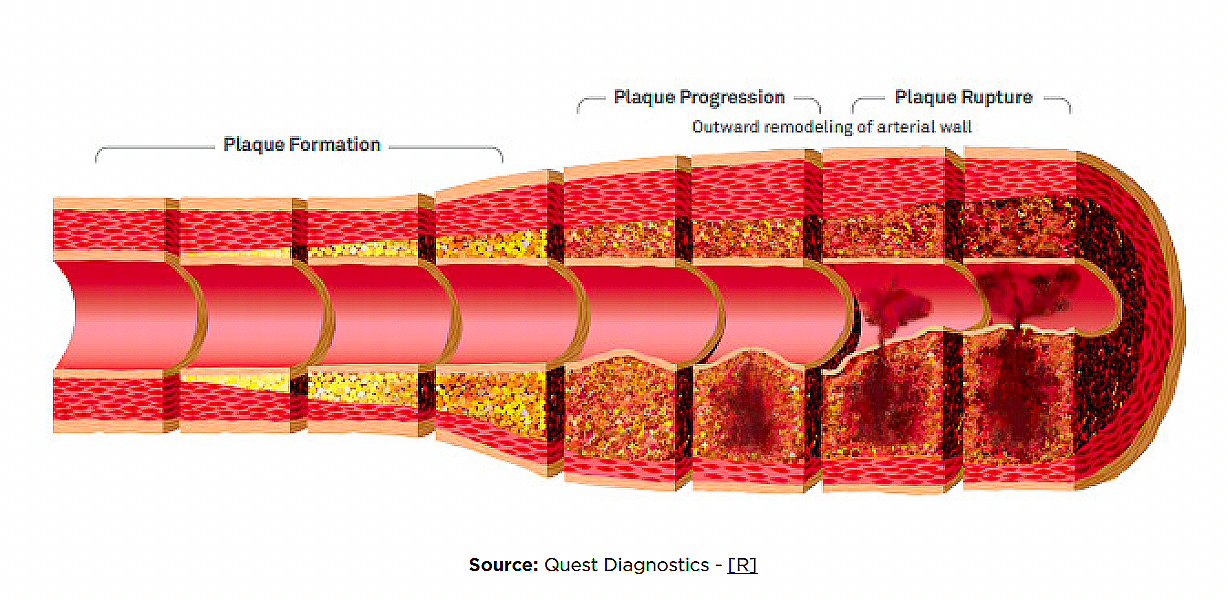
The American Heart Association now estimates that 80 percent of cardiovascular disease is preventable – meaning that this devastating problem and the needless deaths it causes are mostly within our control.
Experts say that making common-sense lifestyle changes - involving correct nutrition, enough exercise, and proper stress management - can go a long way towards alleviating the growing epidemic of heart disease and reducing the risk of heart attacks and strokes.
Is there anything else we can do? Yes!
For the final piece of the heart-protective “puzzle,” many natural health authorities advise daily supplementation with the appropriate high-quality nutrients.
We use a number of evaluation tools to find the right personalized therapeutic solutions for you:

The good news is it’s preventable!
It is said that 70% of cardiovascular events are arteriosclerosis-based and could be prevented through better nutrition, more exercise, targeted supplements, specific lifestyle changes, and deep emotional healing, to name a few.
The question is: How can you prevent something if you don't even know it’s going on?!
This is where Central Intima-Media Thickness Testing (CIMT) comes in. Since introducing the Heart Sound Recorder to our practice six years ago, I have been looking for useful cardiovascular assessment tools. CIMT, Max Pulse, and advanced blood labs have filled this gap!
CIMT Testing offers a more in-depth structural look at your vascular health. It is non-invasive and time- and cost-effective.
Unfortunately, preventative non-invasive vascular imaging testing has been a missing link in public health care. Here is your opportunity!

Study:
In a 10-year, 100,000-person-year study, CIMT detected >98% of heart attacks and strokes BEFORE they occurred.
What is significant about this study:
1) The study involved 10,000 people who were followed for ten years each—thus, 10 X 10,000 = 100,000 person-years of study.
2) CIMTs were measured BEFORE any heart attacks and strokes occurred - so the CIMT Testing correctly identified those patients who had a heart attack or stroke BEFORE the event occurred.
This is important because there doesn’t seem to be any other test in any medical specialty that comes close to this catch rate before a condition arises. (Even home pregnancy tests in the first trimester catch 97%, but this is AFTER the person is pregnant.
Source: Carotid and femoral ultrasound morphology screening and cardiovascular events in low-risk subjects: a 10-year follow-up study (the CAFES-CAVE study). https://pubmed.ncbi.nlm.nih.gov/11395035/
Study:
“Prevalence of Silent Atherosclerosis across Adult Life”
Bundgaard H, Ibáñez B, et al. New England Journal of Medicine, August 29, 2026.
DOI: 10.1056/NEJMoa2609059
PubMed record and abstract
What the researchers did
They studied 16,808 adults ages 18–70 who had no previously known atherosclerotic cardiovascular disease:
Mean age: 45
Women: 51.4%
Countries: Denmark and Spain
Carotid and femoral arteries: 3-dimensional vascular ultrasound
Coronary arteries: coronary CT angiography
Participants were distributed across five age categories with balanced numbers of men and women.
Striking findings
Silent atherosclerosis was detected in 57.1% of the overall study population.
Ages 18–29: 8.7% of men and 6.7% of women
Ages 60–70: approximately 90%
Men followed an atherosclerotic trajectory approximately 5–10 years earlier than women.
Women showed a later but particularly steep increase during midlife, around the usual menopausal transition.
Plaque volume increased exponentially with age.
Younger people generally had plaque in only one arterial territory.
With age, involvement of multiple arterial territories became increasingly common.
Isolated coronary plaque was relatively uncommon: most people with coronary disease also had detectable carotid or femoral plaque. European Society of Cardiology study summary
Why is it important for vascular screening?
The especially consequential finding is that carotid and femoral plaque imaging captured most people who also had coronary atherosclerosis. This raises the possibility that relatively accessible, radiation-free ultrasound could become a first-line method for identifying otherwise hidden systemic disease.
Carotid Intima-Media Thickness Testing evaluates carotid atherosclerotic vascular disease, including sub-arteriosclerosis (subclinical/undiagnosed arteriosclerosis). The test measures the thickness of the inner two layers of the carotid artery - the Intima and Media - and alerts to any thickening when someone might still be asymptomatic. CIMT Testing involves a non-invasive ultrasound to detect vascular inflammation and plaque and evaluate your vascular age, acute stroke, and heart attack risk.
Comprehensive blood work alone might not be sufficient to evaluate your vascular health, even though it includes cardiovascular blood work. Blood work alone is not specific enough to measure vascular plaque and inflammation in real time. Therefore, a combination of Central Intima-Media Thickness Testing AND Comprehensive Blood Labs is best.
If you are looking for more research data that backs up CIMT testing, read: “Prevention Myths - Why Stress Tests Can’t Predict Your Heart Attack and Which Tests To Do.”Ford Brewer, MD, and Todd C Eldredge, PhD. Read more here
Why combine CIMT, Max Pulse, and Advanced Blood Labs?
Because this trio measures three independent domains of vascular disease:
CIMT → structural burden
Max Pulse → arterial stiffness / endothelial function
Labs → inflammatory, metabolic, thrombotic drivers
When all three align, the uncertainty narrows significantly compared to:
Lipids (Cholesterol, LDL, etc.) alone
Framingham score alone or 10-year calculators
CAC alone (in early disease)
Stress Echo
By integrating all three, we are able to:
Establish your true cardiovascular baseline
Detect risk early
Monitor plaque progression over time (if you come in for repeat testing)
Identify modifiable drivers of arterial damage
And implement targeted strategies to stabilize or reduce risk
At Fully Alive, we provide comprehensive health solutions tailored to your personalized findings, measurably lowering your long-term risk of heart attack and stroke.

CIMT Testing should be part of standard care, but unfortunately, it isn’t.
That’s why we at Fully Alive offer CIMT testing to our community!
Register now for Friday, October 23rd, 2026
Read more about Femoral Artery Testing below
Why Book a CIMT Integration Session?
A CIMT Integration Session places your CIMT findings within the broader context of your overall health, existing health challenges, and cardiovascular risk. Although optional, this session is highly recommended when the CIMT reveals significant findings.
CIMT results are generally available 10 days after your ultrasound testing.
When to Consider Femoral Artery Add-on Screening?
Your metabolic or inflammatory risk is elevated
You are currently encountering vascular health challenges in your lower extremities.
If you are a smoker, have diabetes, or are dealing with peripheral vascular symptoms
Note: In some individuals, plaque develops first in the femoral arteries, making the combined carotid and femoral assessment more sensitive for detecting subclinical atherosclerosis at its earliest stages.
Otherwise, we recommend ordering only a Carotid Artery scan.
Refund Policy
Refunds are available until two weeks prior to the testing event, minus a $50 processing fee. No refunds will be offered after October 15th, 2026, but you can always send a family member or friend as your replacement.
Frequency of Testing
The frequency of CIMT repeated testing depends on your first CIMT result findings. We offer CIMT Testing twice yearly, in the Spring and Fall. To join our waiting list for future events, email us at info@fully-alive.com.
Future Testing
CIMTs also provide comparable data for future testing, which is essential for tracking your vascular healing progress. That means you can retest yourself in a year, two, or five to determine if your treatment choices have yielded noticeable results.
Insurance Coverage
At this time, we are not aware of any insurance carrier that covers CIMT testing, as it is more of a technology that supports prevention.
Important Notice
Natural therapies are meant to complement, not replace, standard medical treatment. Never eliminate or reduce your prescribed medication unless advised to do so by your doctor.